jueves, 12 de octubre de 2017

STORY 14. "HAPPY ENDINGS" BY MARGARET ATWOOD

Margaret Eleanor Atwood(born November 18, 1939) is a Canadian poet, novelist, literary critic, essayist, inventor, and environmental activist. She is a winner of the Arthur C. Clarke Award and Prince of Asturias Award for Literature. She has been shortlisted for the Booker Prize five times, winning once, and has been a finalist for the Governor General's Award several times, winning twice. In 2001, she was inducted into Canada's Walk of Fame. She is also a founder of the Writers' Trust of Canada, a non-profit literary organization that seeks to encourage Canada's writing community. Among innumerable contributions to Canadian literature, she was a founding trustee of the Griffin Poetry Prize.


She is seen as one of the world’s leading women novelists, for some the best of them all; she has written poetry, novels, criticism and short stories; she campaigns for human rights and for the environment. 
Nonetheless, across the years, certain themes, concerns and ways of writing recur. Amongst other things, Atwood writes about art and its creation, the dangers of ideology, and sexual politics; she deconstructs myths, fairytales and the classics for a new audience. 
"Happy Endings" was first published in a 1983 Canadian collection, Murder in the Dark.[1]

https://en.wikipedia.org/wiki/Margaret_Atwood

"Happy Endings" is an example of metafiction. That is, it's a story that comments on the conventions of storytelling and draws attention to itself as a story. At approximately 1,300 words, it's also an example of flash fiction. "Happy Endings" was first published in 1983.
The story is actually six stories in one. Atwood begins by introducing the two main characters, John and Mary, and then offers six different versions -- labeled A through F -- of who they are and what might happen to them.
https://www.thoughtco.com/margaret-atwoods-happy-endings-analysis-2990463

sábado, 1 de abril de 2017

STORY 13: "THE VELDT" BY RAY BRADBURY

Ray Douglas Bradbury (August 22, 1920 – June 5, 2012) was an American fantasyscience fictionhorror and mystery fiction author and screenwriter.
Widely known for his dystopian novel Fahrenheit 451 (1953) as well as his science fiction and horror story collections The Martian Chronicles (1950), The Illustrated Man (1951), and I Sing the Body Electric (1969), Bradbury was one of the most celebrated 20th- and 21st-century American writers. While most of his best known work is in speculative fiction, he also wrote in other genres, such as the coming-of-age novel Dandelion Wine (1957) or the fictionalized memoir Green Shadows, White Whale (1992).
Recipient of numerous awards, including a 2007 Pulitzer Citation, Bradbury also wrote and consulted on screenplays and television scripts, including Moby Dick[2] and It Came from Outer Space. Many of his works were adapted to comic book, television and film formats.
On his death in 2012, The New York Times called Bradbury "the writer most responsible for bringing modern science fiction into the literary mainstream".
https://en.wikipedia.org/wiki/Ray_Bradbury

In a career spanning more than seventy years, Ray Bradbury has inspired generations of readers to dream, think, and create.

In "The Veldt," a family live in a technologically driven house that will do everything for its inhabitants - transport you upstairs, brush your teeth, cook the food, and clean the house. The nursery, the most expensive and exciting room of the house, is a place where childen can play, but something is going wrong. 
In this dark and troubling story, Bradbury writes a precautionary tale of the advance of technology and the importance of maintaining communication during these technological advances. 

http://www.gradesaver.com/ray-bradbury-short-stories/study-guide/summary-the-veldt

domingo, 29 de enero de 2017

STORY 12. "THE HITCHHIKER" BY ROALD DAHL


We come back to Roald Dahl with the story "The Hitchhiker". It was originally published in the July 1977 issue of the Atlantic Monthly, and later included in Dahl's short story collection The Wonderful Story of Henry Sugar and Six More. The story features a man who picks up a hitch-hiker whilst driving to London

https://en.wikipedia.org/wiki/The_Hitch-Hiker_(short_story)


For an analysis of the story click HERE

And this is a short film based on "The Hitchhicker"


domingo, 20 de noviembre de 2016

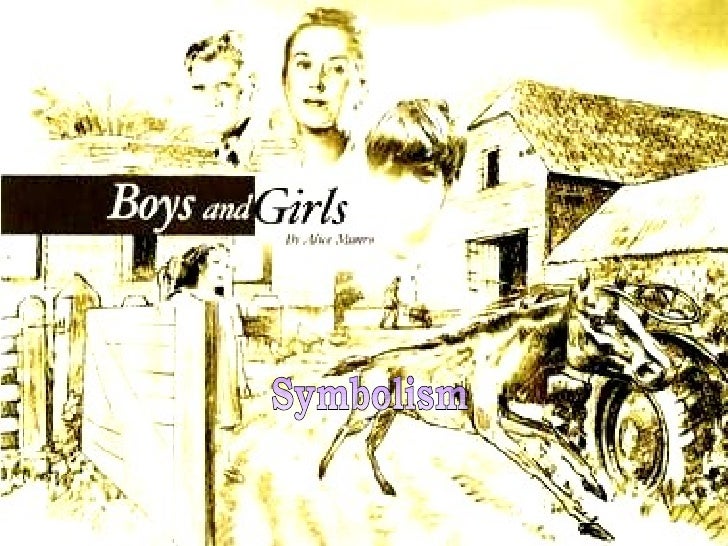
STORY 11: "BOYS AND GIRLS" BY ALICE MUNRO

                         Alice Munro © Derek Shapton
Alice Munro (10 July 1931, Wingham, Canada) Alice was born in Wingham, Ontario in Canada. Her father was a fox and mink farmer and her mother was a teacher. Alice began writing as a teenager. She also studied at the University of Western Ontario and worked as a library clerk. After marrying she moved with her husband to Dundarave, West Vancouver, and moved again in 1963 to Victoria, where the pair opened a bookstore. Since the late 1960s, Alice Munro has dedicated herself to writing. She is married with two daughters from her first marriage.
Alice Munro has dedicated her literary career almost exclusively to the short story genre. She grew up in a small Canadian town; the kind of environment that often provides the backdrops for her stories. These often accommodate the entire epic complexity of the novel in just a few short pages. The underlying themes of her work are often relationship problems and moral conflicts. The relationship between memory and reality is another recurring theme she uses to create tension. With subtle means, she is able to demonstrate the impact that seemingly trivial events can have on a person's life.
https://www.nobelprize.org/nobel_prizes/literature/laureates/2013/munro-facts.html
‘‘Boys and Girls’’ was first published in 1968 in The Montrealer, before it was collected with fourteen other stories and published in Alice Munro’s first edition of short stories, Dance of the Happy Shades (1968). The story, narrated by a young girl, details the time in her life when she leaves childhood and its freedoms behind and realizes that to be a ‘‘girl’’ is to be, eventually, a woman. The child begins to understand that being socially typed entails a host of serious implications. Thus becoming a ‘‘girl’’ on the way to womanhood is a time fraught with difficulties for the young protagonist because she senses that women are considered the social inferiors of men. Initially, she tries to prevent this from occurring by resisting her parents’ and grandparents’ attempts to train her in the likes, habits, behaviour, and work of women. 
http://www.giuliotortello.it/shortstories/boys_and_girls.pdf
http://www.slideshare.net/emmawxyn/boys-and-girls-3142564
http://www.signature-reads.com/2013/08/a-definitive-biography-to-honor-alice-munros-retirement/

domingo, 23 de octubre de 2016

STORY 10: "PARSON'S PLEASURE" BY ROALD DAHL

Roald Dahl, "Parson's Pleasure"
From Wikipedia, the free encyclopedia

"The story builds and expands while you are writing it. All the best stuff comes at the desk."


Roald Dahl (13 September 1916 – 23 November 1990) was a British novelist, short story writer, poet, screenwriter, and fighter pilot.
Born in Wales to Norwegian parents, Dahl served in the Royal Air Force during World War II, in which he became a flying ace and intelligence officer, rising to the rank of Acting wing commander. He rose to prominence in the 1940s with works for both children and adults and became one of the world's best-selling authors.[2][3] He has been referred to as "one of the greatest storytellers for children of the 20th century".[4] Among his awards for contribution to literature, he received the World Fantasy Award for Life Achievement in 1983, and Children's Author of the Year from the British Book Awards in 1990. In 2008 The Times placed Dahl 16th on its list of "The 50 greatest British writers since 1945".[5]
Dahl's short stories are known for their unexpected endings and his children's books for their unsentimental, often very dark humour. His works include James and the Giant PeachCharlie and the Chocolate FactoryMatildaMy Uncle OswaldThe WitchesFantastic Mr FoxThe TwitsTales of the UnexpectedGeorge's Marvellous Medicine, and The BFG.

sábado, 16 de abril de 2016

STORY 9: "THE COUNTRY OF THE BLIND" BY H. G. WELLS

Herbert George Wells (21 September 1866 – 13 August 1946), known primarily as H. G. Wells, was a prolific English writer in many genres, including the novel, history, politics, and social commentary, and textbooks and rules for war games. Wells is now best remembered for his science fiction novels, and is called the father of science fiction, along with Jules Verne and Hugo Gernsback. His most notable science fiction works include The Time Machine (1895), The Island of Doctor Moreau (1896), The Invisible Man (1897), and The War of the Worlds (1898). He was nominated for the Nobel Prize in Literature in four different years.


"The Country of the Blind" is a short story first published in the April 1904 issue of The Strand Magazine and included in a 1911 collection of Wells's short stories. It is one of Wells's best known short stories, and features prominently in literature dealing with blindness. 

viernes, 15 de abril de 2016

STORY 8: "HOW WANG-FÔ WAS SAVED" BY MARGUERITE YOURCENAR

Marguerite Yourcenar (8 June 1903 – 17 December 1987) was a Belgian-born Frenchnovelist and essayist. Winner of the Prix Femina and the Erasmus Prize, she was the first woman elected to the Académie française, in 1980, and the seventeenth person to occupy Seat 3.
The surname Yourcenar was a pen name she later took as a legal surname.
Yourcenar's first novel, Alexis, was published in 1929. She translated Virginia Woolf's The Waves over a 10-month period in 1937.
In 1939 Yourcenar's intimate companion at the time, the literary scholar and Kansas City native Grace Frick, invited the writer to the United States to escape the outbreak of World War II in Europe. Yourcenar lectured in comparative literature in New York City and Sarah Lawrence College. Yourcenar was bisexual; she and Frick became lovers in 1937 and remained together until Frick's death in 1979. After ten years spent in Hartford, Connecticut, they bought a house in Northeast Harbor, Maine on Mount Desert Island, where they lived for decades.
In 1951, she published, in France, the novel Memoirs of Hadrian, which she had been writing with pauses for a decade. The novel was an immediate success and met with great critical acclaim. In this novel, Yourcenar recreated the life and death of one of the great rulers of the ancient world, the Roman emperor Hadrian, who writes a long letter to Marcus Aurelius, the son and heir of Antoninus Pius, his successor and adoptive son. The Emperor meditates on his past, describing both his triumphs and his failures, his love for Antinous, and his philosophy. The novel has become a modern classic.


Oriental Tales (FrenchNouvelles orientales) is a 1938 short story collection. The stories share a self-consciously mythological form; some are based on pre-existing myths and legends, while some are new. The story "How Wang-Fo Was Saved" was adapted into an animated short film by René Laloux in the 1980s.